Data Privacy in Online Proctoring: A Comprehensive Guide for Assessment Organizations
How do we maintain academic integrity in a digital-first world without compromising the privacy rights of test-takers? This question is at the center of the online proctoring conversation. As remote assessments become standard practice, institutions worldwide must balance rigorous security with the fundamental right to data privacy.
Online proctoring solutions are essential for ensuring the fairness and validity of virtual exams. However, they naturally raise concerns regarding how personal information is gathered, stored, and managed. For educational institutions and certification bodies, navigating this landscape is more than a technical hurdle—it is an ethical and legal imperative.
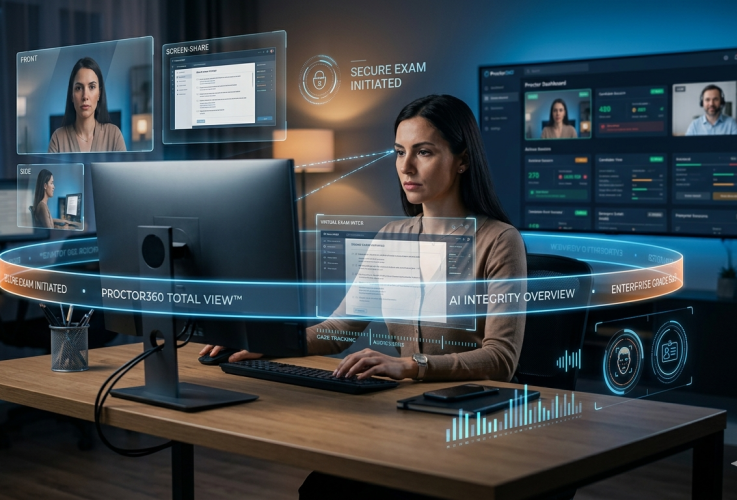
This guide explores the critical dimensions of data privacy in remote assessment. We will examine global regulatory requirements, common test-taker concerns, and best practices for safeguarding sensitive information. Furthermore, we will detail Proctor360’s comprehensive, "privacy-by-design" approach, demonstrating how modern technology can provide secure, compliant, and respectful remote testing.
Understanding Privacy Concerns in Remote Assessment
The shift toward online proctoring has provided immense flexibility, yet the technology introduces specific privacy anxieties that must be addressed to maintain trust.
Surveillance of Private Spaces
Students often feel a sense of "surveillance discomfort" when being monitored in their homes. The presence of a camera in a personal living space can feel invasive, particularly when background environments are recorded. Institutions must be transparent about what data is strictly necessary to ensure exam integrity.
Data Security and Retention Risks
Proctoring platforms handle a significant volume of personal data, including webcam video, audio, screen shares, and identity documents. Ensuring the secure transmission and storage of this data is vital to prevent unauthorized access or breaches.
The Sensitivity of Biometrics
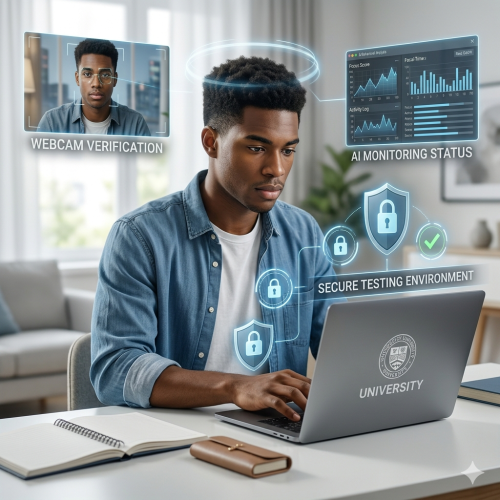
The use of facial recognition for identity verification brings a specific set of challenges. Test-takers often worry about how this immutable data is stored and who has access to it. Proctor360 addresses this by using AI for identity comparison at the start of an exam—verifying the student against their ID—without storing permanent biometric templates for long-term tracking.
Third-Party Data Management
When institutions partner with third-party vendors, they must ensure those partners uphold rigorous protection standards. A lapse in a vendor’s security can expose both the student and the institution to significant reputational and legal risks.
Navigating Global Privacy Regulations
The landscape of data protection varies significantly by region. Compliance is essential to avoid substantial fines and a loss of public trust.
GDPR Compliance (Europe)
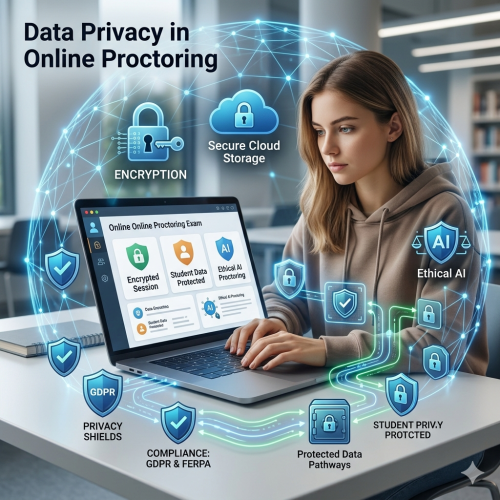
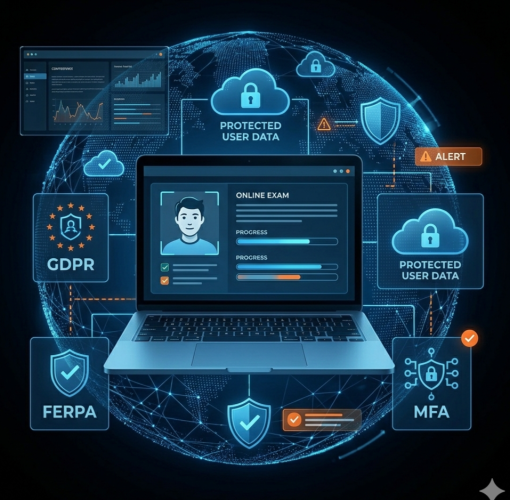
The General Data Protection Regulation (GDPR) mandates strict conditions for explicit consent, data minimization, and transparency. Under GDPR, test-takers have the "right to be forgotten" and the right to access their data. Proctor360 supports these requirements through robust security measures and clear data processing agreements.
North American Standards (FERPA & CCPA)
In the U.S., the Family Educational Rights and Privacy Act (FERPA) protects student education records. Online proctoring services must align with these federal guidelines. Additionally, the California Consumer Privacy Act (CCPA) and CPRA provide residents with strong privacy rights, requiring clear opt-out options and transparent data handling.
Emerging Middle Eastern and Asian Laws
Countries like Saudi Arabia (PDPL), the UAE, Singapore (PDPA), and China (PIPL) have enacted stringent privacy frameworks. These laws often emphasize purpose limitation and secure local data residency. Proctor360’s flexible framework allows institutions to adapt to these diverse legal requirements seamlessly.
Proctor360’s Privacy-by-Design Approach
At Proctor360, we believe trust is the foundation of any assessment program. Our platform is built with a privacy-by-design philosophy, meaning data protection is baked into our technology from the ground up, not added as an afterthought.
Minimal Data Collection Philosophy
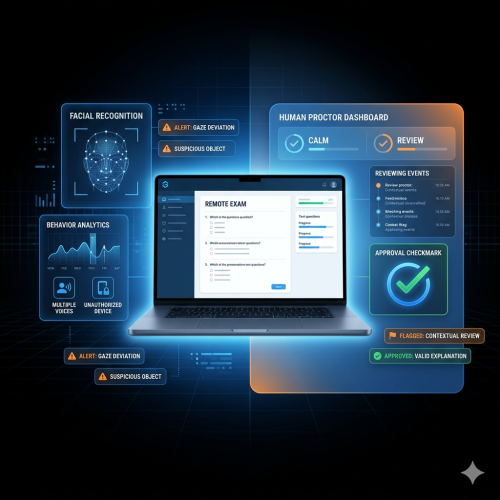
We adhere to the principle of data minimization. We only collect the data absolutely necessary to verify identity and monitor for misconduct. By using AI to identify clear actions (like a mobile phone in view or a second person entering the frame), we reduce the need for excessive environmental recording.
Secure Infrastructure and Encryption
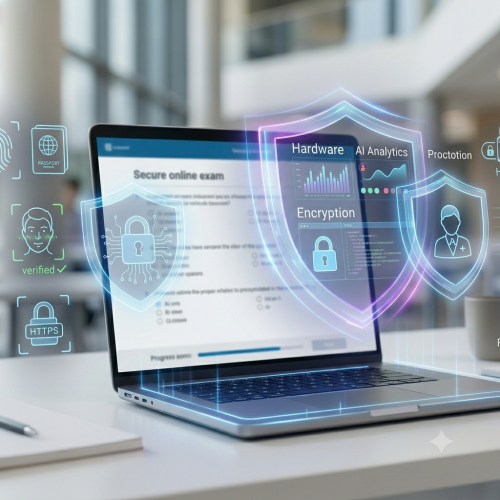
Proctor360 utilizes Amazon Web Services (AWS) for a highly secure cloud infrastructure. All data is encrypted both in transit and at rest using industry-standard protocols. Our systems undergo regular independent security audits to ensure resilience against cyber threats.
Ethical AI and Vector Data
To further protect privacy, Proctor360 utilizes "Ethical AI." Our AI models are pre-built, meaning student data is not processed into the AI's learning algorithm. Furthermore, our identity verification processes often use "vector data"—mathematical representations of a face that cannot be reverse-engineered into a human image—ensuring identity is confirmed without storing sensitive biometric files permanently.
Transparent Data Handling
We provide granular control over data retention. Institutions can set their own policies for how long recordings are kept before they are permanently deleted. This ensures data is only held as long as is necessary to resolve potential academic integrity disputes.
Best Practices for Assessment Organizations
- Strict Vendor Selection: Choose partners who demonstrate a commitment to data protection. Inquire about encryption protocols, independent audits (like SOC2), and specific data minimization strategies.
- Transparent Communication: Before the exam, provide students with a "Privacy FAQ" in accessible language. Explain what is being recorded, why it’s necessary, and when the recording stops.
- Defined Retention Policies: Do not store data indefinitely. Establish clear deletion protocols that trigger once the window for grade appeals has closed.
- Regular Privacy Audits: Conduct periodic Privacy Impact Assessments (PIA) to identify and mitigate risks as technology and regulations evolve.
Why Privacy Matters for Assessment Success
Prioritizing privacy is a strategic imperative that directly impacts the quality of the assessment.
- Higher Trust and Completion: When students feel their privacy is respected, their anxiety levels drop, leading to better focus and higher exam completion rates.
- Reduced Institutional Risk: Proactive compliance with GDPR, FERPA, and CCPA safeguards your institution from legal challenges and costly data breaches.
- Competitive Edge: In a global market, institutions that can prove superior data security attract and retain students who are increasingly aware of their digital rights.
Frequently Asked Questions (FAQs)
1. What specific data does Proctor360 collect? We primarily collect webcam video, audio, and screen recordings during the exam, along with a photo of the student’s ID for verification.
2. How is biometric data handled? Facial recognition is used at the start of the exam to compare the student to their ID. We do not store permanent biometric templates for continuous tracking, and all verification data is deleted according to the institution's retention policy.
3. Is Proctor360 compliant with GDPR and FERPA? Yes. Our framework is designed to align with global standards, including explicit consent mechanisms for GDPR and strict records protection under FERPA.
4. How long is data stored? Data retention is customizable. Typically, data is kept for 6 months (the standard audit window), after which it is securely and permanently deleted from our servers.
5. How does Proctor360 compare to other platforms? Proctor360 differentiates itself through its Ethical AI (user data is not used for AI training) and its commitment to 360-degree transparency, giving both students and instructors clear insight into the proctoring process.
Request a personalized demo today to see the Proctor360 difference in action.
Conclusion
The future of online assessment relies on the balance between academic integrity and unwavering data privacy. By choosing a partner committed to Privacy-by-Design, institutions can navigate the complexities of remote proctoring with confidence—building trust with their community while ensuring a fair and secure testing environment for all.