How do we ensure the integrity of online assessments in an era where academic and professional honesty face increasing challenges? The shift to remote learning and testing has brought incredible flexibility, but it has also opened new avenues for dishonest practices. Traditional online proctoring methods often struggle with blind spots, leaving institutions and certification bodies vulnerable to security breaches.
This challenge has led to a critical need for more robust solutions. Enter 360° Total View™ technology, a groundbreaking approach to online proctoring designed to eliminate blind spots and provide an unprecedented level of oversight. This comprehensive guide will explore what makes this technology so revolutionary, how it works, its practical applications, and why it's becoming the gold standard for secure online assessments.
What is 360° Total View™ Technology?
360° Total View™ technology is an advanced form of remote invigilation that moves beyond the limitations of single-camera setups. Instead of relying on a narrow field of view, it utilizes multiple perspectives to create a complete, uninterrupted panoramic image of the testing
environment. This comprehensive approach ensures that every angle of the candidate and their surroundings is monitored, leaving no room for potential academic dishonesty.
This technology fundamentally changes the game by creating a virtually inescapable monitoring environment. It provides examiners and AI systems with a full picture, enhancing the reliability and trustworthiness of every online test. It is a critical advancement for anyone serious about maintaining assessment integrity in a digital world.
Beyond Single-Camera Limitations
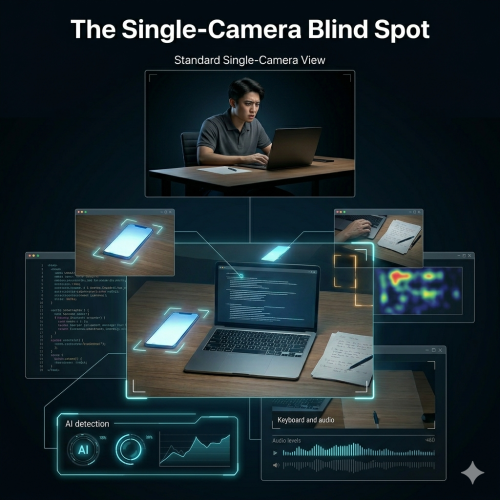
Traditional online proctoring often uses a single webcam, usually built into a laptop. While this offers some oversight, it presents significant blind spots. A candidate could easily place notes out of the camera's view, use a second device, or receive external help without detection. These vulnerabilities undermine the entire purpose of secure remote examinations.
The single-camera setup limits the proctor's ability to see the candidate's desk, behind their screen, or the wider room environment. This restricted view makes it difficult to detect subtle forms of cheating, leading to frustration for honest test-takers and security risks for institutions. Moving beyond this basic approach is crucial for true assessment integrity.
How 360° Environmental Scanning Works
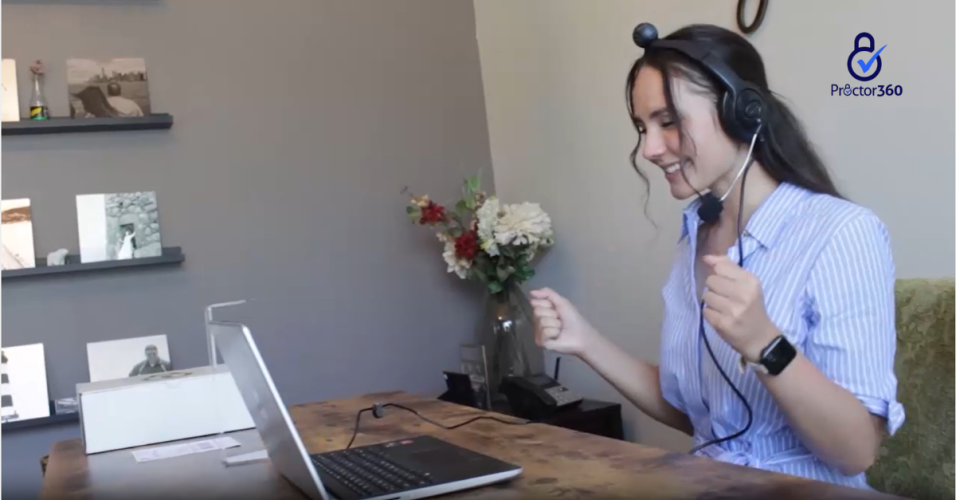
360° environmental scanning employs a combination of hardware and software to achieve its comprehensive view. This often involves a primary webcam combined with an additional device, such as a 360 csmrts, strategically positioned to capture the entire room. The feeds from these multiple devices are then stitched together by specialized software.
The software creates a seamless, panoramic display for the proctor, giving them a "total view" of the candidate's space. This setup ensures that areas traditionally considered blind spots—like the floor, walls, and any peripherals not directly in front of the primary camera— are under constant surveillance. It is a sophisticated method designed to leave no corner unchecked during an assessment.
The Science of Multi-Angle Monitoring
The effectiveness of 360 degree online proctoring lies in the science of multi-angle monitoring. This method leverages spatial awareness and advanced algorithms to detect anomalies that single-camera systems would miss. By analyzing multiple video streams simultaneously, the system can identify discrepancies in candidate behavior or environmental changes.
For example, if a candidate's gaze repeatedly shifts to an area outside the primary camera's view, but visible to a secondary camera, the system can flag this as suspicious. This holistic approach significantly improves the accuracy of cheating detection. It's about creating a net of surveillance rather than a single focal point.
Hardware vs. Software-Based Approaches
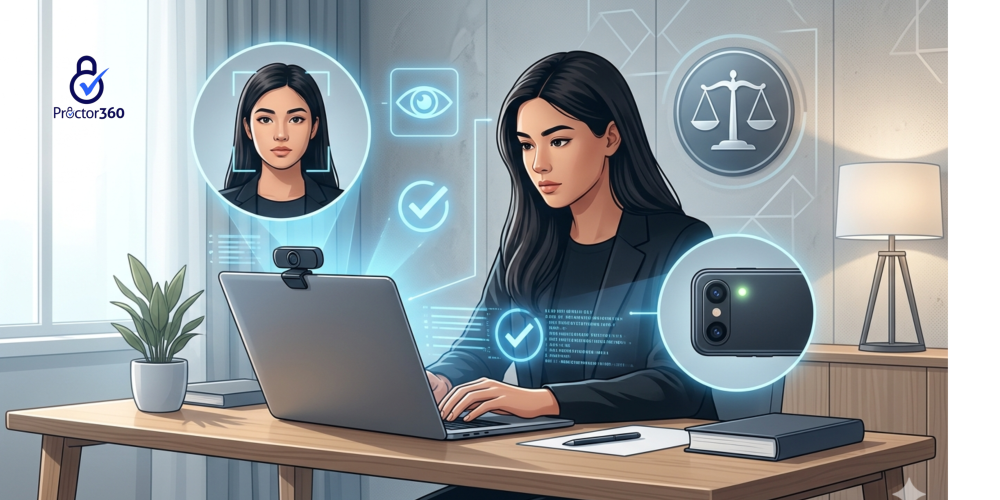
Implementing 360° Total View™ technology can involve both hardware and software solutions. Hardware-based approaches might utilize specialized multi-lens cameras or require candidates to use their smartphone's camera in conjunction with their computer's webcam. These setups offer dedicated angles for maximum coverage.
Software-based solutions, on the other hand, often optimize existing devices. They might guide candidates to position their webcam for a wider angle or use a mobile app to stream a second video feed. Both approaches aim for comprehensive coverage, with the choice depending on the specific requirements for security, ease of use, and integration capabilities.
Technical Deep Dive
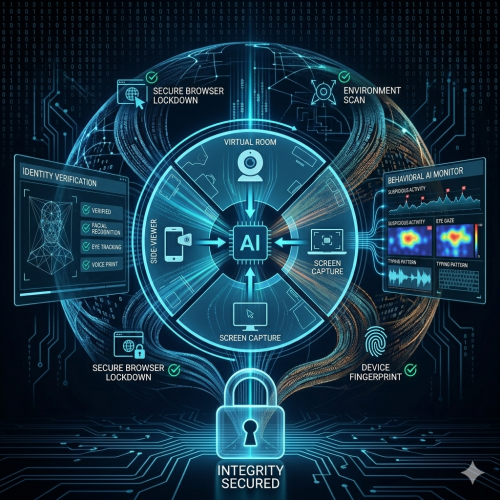
Understanding the core technology behind 360° Total View™ is key to appreciating its robustness. It's not just about more cameras; it's about intelligent processing that turns raw video data into actionable insights for proctors. This sophisticated system relies on cutting edge algorithms and real-time data analysis.
The combination of these elements creates an adaptive and highly accurate proctoring environment. It allows for the detection of subtle behavioral cues and environmental changes that would typically go unnoticed. This makes it a formidable tool in the fight against online cheating.
Core Technology Components
At its heart, 360° Total View™ technology integrates several crucial components to deliver its comprehensive monitoring. These include high-definition video capture from multiple sources, sophisticated video stitching software, and powerful analytical engines. Each component plays a vital role in constructing the complete picture of the testing environment.
The system also incorporates secure data transmission protocols to protect sensitive information and ensure the integrity of the collected evidence. These components work in harmony to provide a reliable and secure proctoring experience, upholding the validity of online assessments.
Real-Time Data Processing
For online proctoring to be effective, data must be processed in real-time. 360° Total View™ technology handles multiple video streams and analytical data concurrently. This immediate processing allows proctors to intervene promptly if a suspicious activity is detected.
Rapid data processing also ensures that the system can adapt to changes in the testing environment without delay. Whether it's a new person entering the room or a forbidden item appearing, the system can register and respond instantly. This immediacy is crucial for maintaining the integrity of high-stakes exams.
Integration Architecture
A robust integration architecture is vital for any modern proctoring solution. 360° Total View™ technology is designed to seamlessly integrate with a wide range of learning management
systems (LMS) and assessment platforms. This includes popular systems like Canvas, Moodle, Blackboard, and various custom assessment engines.
The integration typically involves APIs (Application Programming Interfaces) that allow the proctoring software to communicate directly with the assessment platform. This ensures a smooth user experience for both administrators and candidates, simplifying scheduling, launching exams, and reviewing proctoring reports. Good integration minimizes technical friction.
Comparative Advantages
When evaluating proctoring solutions, it's essential to understand the distinct advantages offered by 360° Total View™ technology. Its comprehensive nature provides benefits that go far beyond what traditional methods can offer. These advantages translate into higher security, better candidate experiences, and improved cost-efficiency.
The data clearly shows that this advanced form of online proctoring delivers superior results in preventing dishonesty. This makes it an indispensable tool for organizations prioritizing exam integrity and fairness for all participants. It's a strategic investment in the credibility of your assessments.
360° vs. Traditional Proctoring: Data-Driven Comparison
The difference between 360 degree online proctoring and traditional methods is stark, especially when looking at the data. Traditional single-camera proctoring often misses significant percentages of cheating attempts due to its limited field of view. These methods are simply not designed to catch sophisticated or subtle forms of dishonesty.
In contrast, 360° Total View™ technology dramatically closes these gaps. Its ability to monitor the entire environment concurrently provides a much more robust defense against cheating. This comprehensive coverage is the key to its superior performance in real-world scenarios, as validated by extensive testing.
False Positive Reduction
While high detection rates are important, minimizing false positives is equally crucial. False positives occur when legitimate candidate behavior is incorrectly flagged as suspicious, leading to unnecessary stress and frustration. 360° Total View™ technology addresses this through its multi-angle context.
By analyzing behavior from multiple perspectives and leveraging sophisticated AI, the system can better differentiate between genuine suspicious activity and innocent movements. This leads to a more accurate assessment of behavior, reducing interruptions and ensuring a smoother experience for honest test-takers. It's about precision as much as breadth of coverage.
Candidate Experience Enhancement
Surprisingly, enhanced security can also lead to a better candidate experience. While some might initially find the idea of comprehensive monitoring intrusive, 360° Total View™ technology aims to create a level playing field. Candidates know that everyone is being monitored fairly, reducing anxiety about others gaining an unfair advantage.
Moreover, reduced false positives mean fewer unnecessary interventions during an exam, allowing candidates to focus better. Clear guidelines and transparent technology also build trust, ensuring candidates understand the proctoring process. This creates a more equitable and less stressful environment for all honest individuals taking the test.
Cost-Efficiency Analysis
Implementing advanced proctoring might seem like a significant investment, but 360 degree online proctoring offers substantial cost-efficiency in the long run. By drastically reducing cheating, it preserves the value of certifications and degrees, preventing the costly repercussions of widespread academic dishonesty. This protects an institution's reputation and the integrity of its programs.
Furthermore, while initial setup may require some resources, the automation and AI capabilities reduce the need for extensive human proctoring resources per session. This allows institutions to scale their remote assessments more efficiently without incurring
prohibitive staffing costs. The investment pays off through increased integrity and operational savings.
Implementation Guide
Adopting 360° Total View™ technology involves careful planning and execution. A smooth implementation ensures that the benefits are fully realized without disrupting existing operations. This section provides a practical framework for integrating this advanced proctoring solution into your assessment ecosystem.
Following these steps will help you transition seamlessly to a more secure and reliable online testing environment. Proper preparation and training are key to success, ensuring both administrators and test-takers are comfortable with the new system. It's about empowering your team with the right tools and knowledge.
Step-by-Step Implementation Framework
The implementation of 360 degree online proctoring typically follows a structured framework. First, conduct a thorough needs assessment to identify specific requirements and pain points. Next, select a vendor that offers robust 360° Total View™ capabilities and excellent support.
Third, initiate a pilot program with a small group of users to test the system and gather feedback. Fourth, integrate the solution with your existing LMS and assessment platforms. Finally, roll out the technology across your organization, providing ongoing training and support. This phased approach minimizes risks and maximizes adoption.
Technical Requirements & Setup
Before deployment, understand the technical requirements. Candidates will typically need a stable internet connection, a computer with a webcam, and potentially a secondary device like a smartphone. The proctoring software will have specific operating system and browser compatibility requirements.
For institutions, server capacity for data storage and processing needs to be considered, especially for large-scale deployments. Installation of client-side software or browser extensions might also be necessary. A clear communication strategy for technical setup is vital for candidates.
Integration with Major LMS Platforms
Seamless integration with your existing Learning Management System (LMS) is crucial for efficient operations. 360° Total View™ technology should offer pre-built integrations or API documentation for popular platforms like Canvas, Moodle, Blackboard, and Brightspace. These integrations allow for easy scheduling and launching of proctored exams.
This means administrators can manage their courses and assessments within their familiar LMS environment, with proctoring details automatically passed to the system. Candidates also benefit from a streamlined experience, often launching their proctored exam directly from their course page. Such integration saves time and reduces administrative burdens significantly.
Staff Training & Administration
Proper training for your administrative and proctoring staff is non-negotiable. They need to understand how the 360° system works, how to interpret alerts, and how to intervene effectively. Training should cover software navigation, report analysis, and best practices for supporting candidates.
Administrators should also be trained on configuring settings, managing user accounts, and generating compliance reports. Ongoing training and refreshers are beneficial, especially as the technology evolves. Well-trained staff are critical to the successful and ethical operation of the proctoring system.
Scaling from Pilot to Enterprise
Once a pilot program proves successful, the next step is to scale the 360 degree online proctoring solution across your entire enterprise. This involves careful planning for increased user load, data storage, and support infrastructure. Consider staggered rollouts to different departments or programs to manage the transition effectively.
Review the pilot's performance data, feedback, and any technical bottlenecks identified. Use these insights to refine the implementation strategy for a larger scale. Ensure your chosen vendor can provide the necessary support and infrastructure to handle a significant increase in concurrent users and data processing. Scalability is key to long-term success.
Regional Compliance Considerations
Implementing any online proctoring solution, especially one as comprehensive as 360° Total View™ technology, requires careful attention to regional data privacy laws and compliance
regulations. These vary significantly across different parts of the world, and adherence is critical to avoid legal issues and maintain trust.
Understanding these nuances ensures that your proctoring practices are both effective and ethically sound. It's not just about what you can monitor, but how you can do it responsibly and legally. This foresight protects both your institution and your test-takers.
Global Implementation Best Practices
When deploying 360 degree online proctoring globally, adopt best practices that prioritize transparency, data minimization, and strong security measures. Clearly inform candidates about what data is collected, how it's stored, and for how long. Use end-to-end encryption for all video feeds and personal data.
Obtain explicit consent from candidates before proctoring begins, and provide clear opt-out options where legally required. Regularly audit your practices against international standards. A proactive approach to global data governance will build confidence and ensure smooth operations across diverse regions.
North America: FERPA & Accessibility Compliance
In North America, particularly the United States, institutions must adhere to the Family Educational Rights and Privacy Act (FERPA). This law protects the privacy of student education records. Proctoring data must be handled in a way that complies with FERPA's guidelines regarding access, storage, and sharing of student information.
Additionally, accessibility for individuals with disabilities is a significant concern. Online proctoring solutions must comply with standards like WCAG (Web Content Accessibility Guidelines) and provide reasonable accommodations for diverse candidate needs. This ensures fair access to assessments for all students, aligning with the Americans with Disabilities Act (ADA).
Europe: GDPR & Data Privacy
Europe has some of the strictest data privacy laws, most notably the General Data Protection Regulation (GDPR). GDPR requires explicit consent for data collection, specifies how personal data must be processed, stored, and protected, and grants individuals significant rights over their data. 360° Total View™ technology must be GDPR-compliant.
This includes features like data anonymization, strict data retention policies, and the ability for individuals to request deletion of their data. Institutions must also ensure that data is
stored within GDPR-compliant jurisdictions, or that appropriate data transfer agreements are in place for cross-border assessments. Failure to comply can result in severe penalties.
Middle East & Asia: Cultural & Infrastructure Considerations
In the Middle East and Asia, cultural norms and varying infrastructure present unique challenges for 360 degree online proctoring. Privacy expectations can differ, and solutions need to be culturally sensitive, respecting local customs and traditions while maintaining security. Translation and localization of the proctoring interface are often essential.
Infrastructure, particularly internet bandwidth and reliable electricity, can also be variable. Solutions must be designed to function effectively even with lower bandwidth or intermittent connectivity. Providing flexible proctoring options that accommodate these conditions is key to successful implementation in these regions.
Industry-Specific Use Cases
The versatility of 360° Total View™ technology makes it suitable for a broad range of applications beyond traditional academic exams. Its ability to provide comprehensive oversight is valuable across various sectors where secure and credible assessments are paramount. This adaptability ensures wide applicability and maximum impact.
From certifying professionals to training corporate employees, the need for reliable online assessment security is universal. 360 degree online proctoring offers tailored solutions that meet the specific demands of each industry, enhancing trust and validity across the board.
Higher Education & Universities
For higher education institutions, 360° Total View™ technology is a powerful tool to maintain academic integrity in online courses and distance learning programs. It allows universities to offer high-stakes exams remotely with the same level of confidence as in-person proctoring. This supports the growth of flexible learning models without compromising standards.
It helps prevent cheating on midterms, finals, and specialized certification exams, protecting the reputation of the institution and the value of degrees. Students can pursue their education remotely, knowing that their efforts are judged fairly against their peers. This ensures a level playing field for all.
Professional Certification Bodies
Professional certification bodies rely heavily on the integrity of their exams to ensure that certified individuals possess the necessary skills and knowledge. 360° Total View™ technology provides the rigorous security needed for these high-stakes assessments, from IT certifications to medical board exams. It ensures that only truly qualified candidates earn their credentials.
This maintains the credibility of the certification and protects the public trust in certified professionals. The enhanced detection capabilities reduce the risk of individuals entering professions under false pretenses. It's a vital safeguard for professional standards and public safety across many fields.
Corporate Training & Assessments
In the corporate world, comprehensive proctoring supports compliance training, internal certifications, and skill assessments for employees. Companies need to ensure that their workforce understands critical policies, regulatory requirements, or new technical skills. 360 degree online proctoring helps validate that training outcomes are genuinely achieved.
It can also be used for pre-employment testing, ensuring that job candidates are honestly demonstrating their abilities. This reduces the risk of hiring individuals who have misrepresented their skills, saving companies significant resources in the long run. It's a smart investment in workforce quality and compliance.
Entrance Exams
Organizations administering entrance exams for selective programs, scholarships, or specialized schools face immense pressure to ensure fairness and prevent cheating. 360° Total View™ technology offers a robust solution for these critical assessments. It safeguards the integrity of admissions processes and ensures that opportunities are awarded based on merit.
This is particularly important for exams that determine access to limited and highly competitive slots. By preventing dishonest practices, the technology helps these organizations maintain public trust and uphold equitable selection processes. It's a cornerstone for fair access to educational and professional pathways.
ROI & Business Impact
Investing in 360° Total View™ technology isn't just about preventing cheating; it's about realizing significant return on investment (ROI) and positive business impact. The benefits extend to financial savings, enhanced reputation, and improved operational efficiency. This technology is a strategic asset for any organization conducting online assessments.
Understanding these broader impacts helps justify the adoption of such advanced solutions. It highlights how improved integrity translates directly into tangible gains for the institution or company. This makes the decision to upgrade to 360 degree online proctoring a clear business imperative.
Measuring Success & Return on Investment
Measuring the success of 360 degree online proctoring involves more than just counting cheating incidents. ROI can be calculated through reduced financial losses from fraudulent certifications, decreased administrative costs associated with investigating cheating, and the preservation of institutional reputation. Quantifying these elements provides a clear picture.
Improved student retention rates due to a fairer environment, or increased public trust in certified professionals, also contribute to ROI. These less tangible benefits are often just as important as direct cost savings. A holistic view of success considers both the quantitative and qualitative impacts of enhanced integrity.
Cost Savings Analysis
One direct benefit of 360° Total View™ technology is significant cost savings. By preventing widespread cheating, institutions avoid the costs associated with retesting, potential lawsuits from aggrieved parties, and the devaluation of their credentials. The reduced need for extensive human proctoring can also lead to operational savings.
Furthermore, the long-term impact on reputation, which translates into increased enrollments or program participation, indirectly contributes to financial gains. Protecting the integrity of online exams safeguards the financial investments made in developing and delivering those assessments. This is a smart financial decision for any organization.
Cheating Prevention Metrics
The most direct impact is seen in cheating prevention metrics. With a 76% reduction in cheating, organizations can confidently issue credentials knowing they are earned honestly. This metric directly validates the investment in 360 degree online proctoring and provides concrete evidence of its effectiveness.
Monitoring metrics such as flagged incident rates, confirmed cheating cases, and overall candidate compliance helps demonstrate the value. These metrics allow administrators to
track improvements over time and report on the enhanced security of their online assessment programs. It’s a clear demonstration of the technology’s power.
Scalability Benefits
As organizations grow and the demand for online assessments increases, the scalability of 360° Total View™ technology becomes a major benefit. It allows for the efficient proctoring of thousands of candidates simultaneously without a proportional increase in human proctoring staff. This is crucial for large-scale operations like university admissions or global certification programs.
The automated aspects and robust infrastructure support high volumes, making it a future proof solution for expanding assessment needs. This scalability means institutions can grow their online programs without compromising on security or incurring unsustainable operational costs. It supports strategic expansion effectively.
Competitive Advantage
Adopting 360 degree online proctoring provides a significant competitive advantage. Institutions and companies that can guarantee the highest level of assessment integrity will attract more serious students and clients. This commitment to fairness and security differentiates them in a crowded market.
It signals a dedication to quality and ethical standards, enhancing brand reputation and trustworthiness. In an environment where cheating is a growing concern, being at the forefront of secure online assessment technology positions an organization as a leader. This translates into stronger enrollment, better talent acquisition, and increased market share.
Future Trends & Innovations
The field of online proctoring is constantly evolving, driven by advancements in artificial intelligence and the ever-present need to stay ahead of cheating methods. 360° Total View™ technology is well-positioned to integrate these emerging trends, further solidifying its role as a leading solution.
Looking ahead, we can expect even more sophisticated tools that enhance security while striving for a more seamless and less intrusive candidate experience. These innovations promise to make online assessments even more reliable and efficient. The future of proctoring is dynamic and exciting.
AI & Machine Learning Advancements
The future will see even more sophisticated AI and machine learning algorithms powering 360 degree online proctoring. Expect AI to become even better at distinguishing between intentional cheating and innocent behavior, leading to near-zero false positives. Machine learning models will continuously adapt to new cheating techniques, staying one step ahead.
Behavioral biometrics, analyzing unique patterns in keystrokes, mouse movements, and gaze, will become more prevalent. AI will also facilitate more predictive analytics, identifying candidates at higher risk of cheating before an incident occurs. These advancements will make the system smarter and more proactive.
Blockchain for Exam Integrity
Blockchain technology holds promise for enhancing exam integrity by providing an immutable and transparent record of assessment events. It could be used to securely record proctoring logs, candidate identities, and even exam results, making them tamper-proof. This adds an additional layer of trust and verification.
Imagine a blockchain ledger that timestamps every proctoring session, verifies identity, and records any flagged incidents without possibility of alteration. This distributed, secure database could revolutionize how exam results and proctoring evidence are stored and validated, further strengthening the credibility of online assessments.
Biometric Authentication Evolution
Biometric authentication in proctoring will continue to evolve, moving beyond simple facial recognition. Advanced systems might incorporate passive biometrics like continuous facial recognition, voice recognition, or even gait analysis for identity verification. These methods ensure that the correct person is taking the exam throughout the entire session.
Eye-tracking technology could monitor gaze patterns to ensure candidates are focused on the exam content. The goal is to provide seamless, continuous authentication that is less intrusive than traditional methods while being highly secure. This makes the process more robust and user-friendly over time.
Conclusion
The need for reliable and secure online assessments has never been greater. 360° Total View™ technology represents a monumental leap forward in addressing this critical demand. By eliminating blind spots, leveraging advanced AI, and providing a comprehensive view of the testing environment, it sets a new standard for integrity in online proctoring.
From reducing cheating by a remarkable 76% to ensuring compliance with global data privacy regulations, its benefits are far-reaching. This technology offers higher education institutions, certification bodies, and corporate training departments the confidence to administer high-stakes exams remotely, knowing their results are truly valid. Embracing 360 degree online proctoring is not just an upgrade; it's a strategic investment in the future of credible online education and assessment.
Ready to transform your online assessment security and ensure unmatched integrity? Explore how 360° Total View™ technology can safeguard your programs and uphold the value of your credentials. Contact us today for a personalized demonstration and see the future of proctoring in action.
FAQs
1. How effective is 360-degree proctoring at preventing cheating compared to traditional single-camera methods?
360-degree proctoring significantly enhances cheating prevention compared to traditional single-camera methods. By capturing a complete, panoramic view of the testing environment, it eliminates common blind spots where dishonest activities often occur. This comprehensive coverage makes it exceedingly difficult for candidates to use unauthorized materials or receive external help undetected.
Studies have shown that this advanced approach can reduce cheating by up to 76% compared to basic proctoring systems. The multi-angle monitoring, combined with AI-
powered behavior analysis, provides a much more robust and accurate detection system. This ensures a fairer testing experience for all participants and upholds the integrity of your assessments.
2. What are the privacy implications and compliance requirements for 360-degree proctoring across different regions?
Implementing 360-degree proctoring requires careful consideration of privacy implications and strict adherence to regional compliance requirements. In Europe, GDPR (General Data Protection Regulation) mandates explicit consent for data collection, clear data processing guidelines, and robust data protection measures. Similar regulations exist in other regions, such as FERPA (Family Educational Rights and Privacy Act) in North America.
Providers of 360 degree online proctoring must ensure transparent policies regarding data collection, storage, and retention. They should offer features like data minimization, secure encryption, and the ability for individuals to access or delete their data as required by law. Cultural considerations regarding surveillance also play a role in how the technology is deployed and communicated, especially in regions like the Middle East and Asia.
3. How does 360-degree proctoring integrate with existing LMS and assessment platforms?
Modern 360-degree proctoring solutions are designed for seamless integration with a wide range of existing Learning Management Systems (LMS) and assessment platforms. This typically involves using robust Application Programming Interfaces (APIs) or pre-built connectors to ensure compatibility. Popular LMS platforms like Canvas, Moodle, Blackboard, and Brightspace usually have established integration pathways.
This integration allows administrators to schedule and launch proctored exams directly from their familiar LMS interface, streamlining workflow. It also ensures that proctoring data and reports are easily accessible within the administrative environment. The goal is to provide a smooth, efficient experience for both exam administrators and candidates, minimizing technical disruptions.
4. What is the total cost of ownership and ROI for implementing 360- degree proctoring?
The total cost of ownership (TCO) for 360-degree proctoring includes initial setup fees, software licenses, potential hardware costs (if specialized cameras are used), and ongoing
support and maintenance. While the upfront investment might be higher than basic proctoring, the return on investment (ROI) is substantial, especially in the long run.
ROI is realized through significant reductions in cheating, which preserves the value of certifications, degrees, and training outcomes. This protects institutional reputation and prevents costly retesting or legal issues. Additionally, the automation capabilities can lead to long-term operational savings by reducing the need for extensive human proctoring resources per session, allowing for greater scalability and efficiency.
5. How does 360-degree proctoring handle accessibility requirements and diverse candidate needs?
Handling accessibility requirements and diverse candidate needs is a crucial aspect of ethical 360-degree proctoring. Reputable solutions are designed to comply with accessibility standards, such as WCAG (Web Content Accessibility Guidelines). This includes features like keyboard navigation, screen reader compatibility, and adjustable display settings.
Furthermore, providers typically offer accommodations for candidates with specific needs, such as extended time, quiet environments, or the use of assistive technologies. Clear communication and flexible options are key to ensuring that all candidates can take their exams fairly and securely. The technology should be adaptable to support various learning styles and physical requirements, ensuring an inclusive testing environment.