Are you struggling to keep pace with the ever-evolving landscape of online assessments, especially when it comes to combating sophisticated cheating methods and ensuring test validity? In today's digital world, online exams are a common practice, but they come with
significant challenges. The integrity of these assessments is constantly under threat, making reliable monitoring and insightful data more important than ever before. Traditional, post exam analysis often comes too late, like trying to close the barn door after the horses have bolted. What if you could see issues unfolding as they happen? This is where real-time exam analytics truly shines, offering immediate visibility and the power to intervene or adapt on the fly. Advanced exam analytics software provides the tools necessary to turn raw data into actionable intelligence, helping assessment companies and educational institutions maintain the highest standards of academic integrity and testing quality.
The State of Online Assessment: Statistics That Will Shock You
The world of online assessments is experiencing rapid growth, with the test management software market projected to soar from $1.13 billion in 2024 to an astonishing $6.25 billion by 2035. This expansion highlights a clear need for robust and reliable assessment solutions. However, this growth also brings increased complexity and a higher risk of academic misconduct. Cheating rates in online exams have seen a dramatic increase, jumping from 0.5% pre-pandemic to 6.6% today. This 14-fold rise is a serious concern for any organization that relies on fair and accurate testing. Furthermore, emerging technologies like AI are adding new layers to this challenge, with approximately 11% of assignments now showing 20% or more AI-generated content. These statistics underscore why real-time data analysis isn't just a luxury, but a necessity.
Insight 1: Behavioral Anomaly Detection in Real-Time
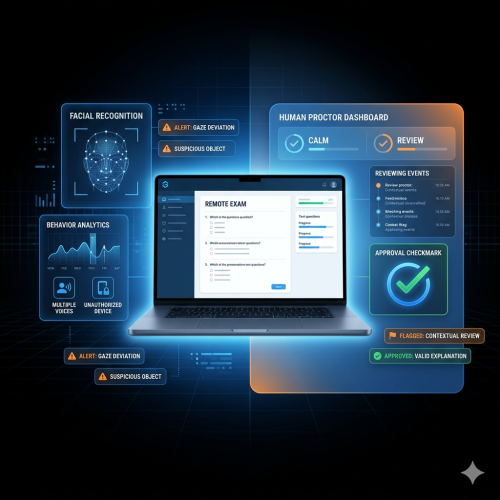
One of the most powerful features of modern exam analytics software is its ability to detect unusual candidate behavior as it happens. Instead of reviewing hours of video footage after an exam, real-time behavioral anomaly detection flags suspicious patterns immediately. This could include frequent eye movements away from the screen, excessive head movements, or unusual keyboard activity. By employing machine learning algorithms, these systems can identify behavioral clusters that deviate from normal testing patterns. Research indicates that around 33% of test-takers exhibit suspicious behavioral patterns. Real-time flagging allows proctors or automated systems to investigate or intervene during the exam, rather than retrospectively invalidating results. This proactive approach significantly enhances test security and helps maintain the credibility of the assessment.
Insight 2: Predictive Cheating Risk Scoring
Moving beyond simple detection, advanced analytics can actually predict the likelihood of cheating. Machine learning models analyze various data points, such as a candidate's historical performance, time spent on questions, answer consistency, and even environmental cues captured by webcams. These models assign a real-time risk score to each candidate. A high-risk score can trigger specific actions, such as increased monitoring, immediate alerts to proctors, or even dynamic adjustments to the exam itself. Integrating these predictive models into existing assessment workflows allows institutions to prevent cheating before it fully materializes. This proactive defense mechanism is a game-changer for maintaining academic integrity.
Insight 3: Item-Level Performance Analytics
Understanding how individual questions perform during an exam provides invaluable insights. Real-time item-level analysis can show the difficulty and discrimination of each question as candidates answer them. If a question is consistently being answered incorrectly by high-scoring candidates, or if low-scoring candidates are getting it right too often, it might indicate an issue with the question itself. Identifying problematic questions during an exam allows for potential removal from scoring or immediate adjustments in adaptive testing scenarios. This ensures that the assessment remains fair and accurate for all participants. Such dynamic optimization based on live data helps to improve the overall quality and validity of the exam experience.
Insight 4: Multimodal Signal Fusion
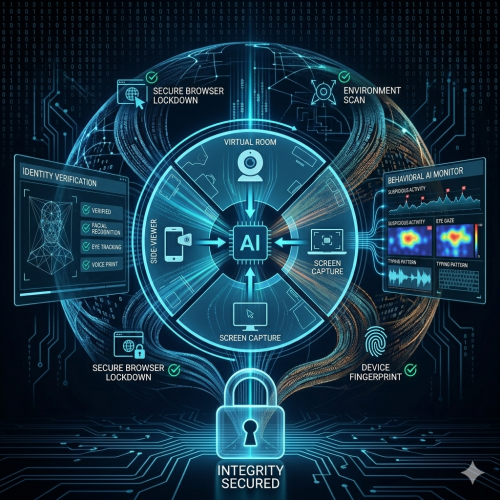
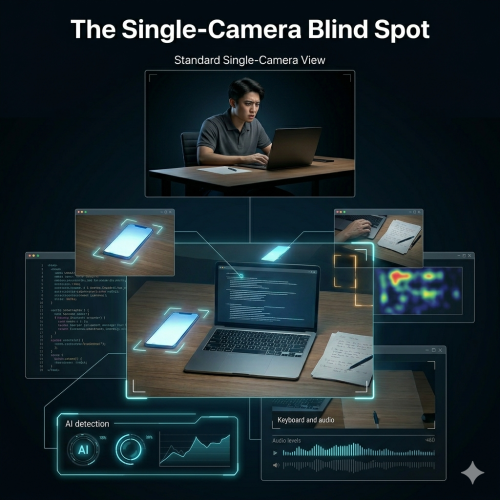
Effective cheating detection often requires more than just one source of information. Multimodal signal fusion combines data from multiple sensors, such as camera feeds, audio recordings, keystroke patterns, and screen activity. This holistic approach creates a much richer picture of the testing environment. By cross-referencing these data streams, the system can reduce false positives significantly. For example, a candidate looking away might be flagged by a camera, but if audio analysis confirms they are speaking to themselves and keystroke data shows continuous typing, the risk might be lower. This comprehensive data integration strengthens the accuracy of cheating detection and provides a more reliable assessment of candidate behavior.
Insight 5: Real-Time Psychometric Validation
For high-stakes exams, psychometric validation is crucial for ensuring fairness and reliability. Real-time exam analytics can calculate live reliability and validity metrics as the exam progresses. This allows assessment administrators to detect any construct-irrelevant variance or unexpected statistical anomalies during the testing window. Monitoring these metrics in real time helps ensure that the test is performing as expected and remains fair for all candidates. If issues arise, administrators can respond promptly, preventing widespread problems and maintaining the integrity of the assessment. This capability is particularly valuable for certification bodies and large-scale academic institutions.
Insight 6: Candidate Experience Analytics
The success of an online exam isn't just about security; it's also about the candidate's experience. Real-time analytics can monitor indicators of candidate stress, engagement levels, and potential technical difficulties. This might include tracking how long a candidate spends on a question without activity or repeated interactions with help buttons. Identifying
accessibility issues, technical glitches, or signs of frustration in real time allows for immediate support and intervention. Optimizing test design and delivery based on live feedback can significantly improve the overall candidate experience and reduce complaints. A smooth experience helps candidates focus better and perform at their best.
Insight 7: Infrastructure Performance Monitoring
Online exams rely heavily on robust technological infrastructure. Real-time monitoring of server load, bandwidth usage, and network latency is essential to prevent system failures during critical testing periods. Unexpected surges in traffic or network congestion can disrupt exams, causing stress for candidates and logistical nightmares for administrators. Predictive scaling for peak testing periods helps ensure that resources are available when needed most, guaranteeing 99.9% uptime. Proactive identification of performance bottlenecks prevents exam disruptions and ensures a seamless experience for all participants. This technical insight is vital for the smooth operation of any large-scale assessment program.
Insight 8: Integration Health Dashboard
Most assessment platforms don't operate in a vacuum; they integrate with Learning Management Systems (LMS), Student Information Systems (SIS), and other third-party tools. A real-time integration health dashboard provides an immediate overview of these connections. It monitors API performance, data synchronization status, and system responsiveness. Automated alerts for integration failures mean that problems can be addressed immediately, preventing data loss or incorrect information from impacting assessments. Smooth integration ensures that candidate data, exam schedules, and results flow seamlessly between systems. This prevents operational headaches and maintains data integrity across the entire educational ecosystem.
Insight 9: Compliance and Audit Trail Analytics
Data privacy and regulatory compliance, such as GDPR and FERPA, are non-negotiable in online assessments. Real-time analytics can monitor adherence to these regulations, ensuring that data collection and processing remain compliant. Automated systems can flag any potential breaches or unauthorized access attempts as they occur. Immutable audit trails, potentially leveraging blockchain technology, provide a transparent and unalterable record of all exam activities. This real-time reporting for regulatory requirements helps institutions demonstrate compliance and protects them from legal repercussions. Ensuring robust security and privacy measures builds trust with candidates and stakeholders.
Insight 10: ROI and Business Intelligence
Demonstrating the return on investment (ROI) for exam analytics software is crucial for stakeholders. Real-time business intelligence provides immediate insights into cost savings from reduced cheating, improved test validity, and enhanced operational efficiency. By quantifying the benefits, organizations can clearly see the value of their investment. Predictive analytics can also support broader business planning, such as forecasting demand for certain exams or identifying areas for process improvement. These insights empower assessment companies to make data-driven decisions that impact their bottom line and strategic direction. Showing tangible value helps secure future funding and support for these critical tools.
Insight 11: Actionable Alerting and Workflow Automation
Gathering data is only half the battle; knowing what to do with it is the other. Real-time exam analytics excels at providing smart, actionable alerts based on the severity and context of detected events. Instead of a flood of raw data, administrators receive prioritized notifications that require their attention. Automated incident response workflows can be triggered by these alerts, streamlining the process of investigation and intervention. For example, a high cheating risk score might automatically flag a candidate's session for human review and temporarily pause their exam. Human-in-the-loop optimization ensures that the system continuously learns and improves, making future responses even more effective and efficient.
Implementation Roadmap: Getting Started with Real-Time Analytics
Adopting real-time exam analytics might seem daunting, but a structured approach can make the process smooth and successful. Here's a typical roadmap to guide your implementation journey.
Phase 1: Assessment and Planning (Weeks 1-2)
During this initial phase, you'll identify your specific needs and current challenges. This involves evaluating your existing assessment processes, infrastructure, and security protocols. Define clear objectives for what you want to achieve with real-time analytics, such as reducing cheating rates or improving test validity.
Research and select the most suitable exam analytics software that aligns with your organization's goals and budget. Engage key stakeholders, including IT, academic
staff, and administrative teams, to ensure everyone is on board and understands the benefits.
Phase 2: Integration and Configuration (Weeks 3-6)
This phase focuses on connecting your chosen analytics platform with your existing systems. This typically involves integrating with your Learning Management System (LMS), Student Information System (SIS), and any other relevant assessment tools. Utilize APIs and LTI standards for seamless data flow.
Configure the analytics settings to match your specific assessment policies and thresholds. This includes setting parameters for behavioral anomaly detection, risk scoring, and alert triggers. Thoroughly test all integrations to ensure data is being collected and processed correctly.
Phase 3: Pilot Testing and Optimization (Weeks 7-10)
Before a full rollout, conduct pilot tests with a smaller group of exams or candidates. Monitor the system's performance, evaluate the accuracy of alerts, and gather feedback from proctors and administrators. This phase is crucial for identifying any unforeseen issues and refining the system.
Analyze the initial data and adjust the configuration settings as needed to optimize performance and minimize false positives. Train your proctoring staff and technical support teams on how to effectively use the new real-time analytics tools and respond to alerts. Document all processes and best practices developed during the pilot.
Phase 4: Full Deployment and Scaling (Week 11+)
Once pilot testing is successful and the system is optimized, proceed with full deployment across all relevant online exams. Continuously monitor the system's performance and scalability, especially during peak testing periods. Ensure that your infrastructure can handle the increased data processing demands.
Regularly review the analytics reports to identify long-term trends and further opportunities for improvement. Stay updated with new features and updates from your exam analytics software provider to continuously enhance your assessment integrity and efficiency. Foster a culture of continuous improvement in your assessment practices.
Choosing the Right Exam Analytics Software: 7 Critical Criteria
Selecting the best exam analytics software for your institution requires careful consideration. Not all platforms are created equal, and the right choice can significantly impact your assessment integrity and operational efficiency. Here are seven crucial criteria to keep in mind:
1. Real-time Processing Capabilities: Does the software offer true real-time data collection and analysis? Can it provide immediate insights and alerts during an exam, not just after it? This is fundamental for proactive intervention and preventing issues.
2. Integration Flexibility: How well does it integrate with your existing Learning Management Systems (LMS), Student Information Systems (SIS), and other assessment tools? Look for platforms with robust APIs, LTI support, and pre-built connectors to ensure seamless data flow.
3. Accuracy and False Positive Rates: Evaluate the accuracy of its cheating detection algorithms and, crucially, its false positive rate. A system that flags too many innocent candidates can erode trust and create unnecessary work for proctors.
4. Scalability and Performance: Can the software handle the volume of exams and candidates your organization manages, especially during peak periods? Ensure it can scale effectively without compromising performance or causing system slowdowns.
5. Compliance and Security Features: Verify that the platform complies with relevant data privacy regulations like GDPR and FERPA. It should also offer strong data encryption, secure data storage, and comprehensive audit trails to protect sensitive information.
6. Psychometric Capabilities: Does the software include advanced psychometric analysis tools, such as item response theory (IRT), reliability analysis, and validity metrics? These features are essential for ensuring the quality and fairness of your assessments.
7. ROI and Business Value Demonstration: Can the provider clearly articulate the financial and operational benefits of their solution? Look for features that help you quantify cost savings, improve efficiency, and enhance the overall value of your assessment program.
The Future of Exam Analytics: 5 Emerging Trends
The field of exam analytics is constantly evolving, driven by advancements in artificial intelligence and the increasing demand for secure and fair assessments. Here are five emerging trends that will shape its future:
1. AI vs. AI: Advanced Cheating Detection: As AI becomes more sophisticated in assisting cheating, so too will AI-powered detection methods. This arms race will lead
to more complex behavioral analytics, predictive models, and pattern recognition to outsmart new forms of academic misconduct.
2. Blockchain for Immutable Records: Blockchain technology offers a decentralized and tamper-proof way to record exam activities and results. This creates an immutable audit trail, enhancing transparency and trust in the integrity of assessment data, from proctoring events to final scores.
3. Deep Learning and Machine Learning for Predictive Analytics: Expect even more powerful predictive capabilities. Deep learning models will analyze vast datasets to anticipate potential cheating risks, identify at-risk students, and optimize exam designs before issues arise, moving from reactive to highly proactive security.
4. Multimodal Biometric Integration: Beyond traditional webcam and audio, future systems will integrate more biometric data. This could include advanced facial recognition for continuous authentication, voice recognition for speaker identification, and even gaze tracking to confirm focus, creating an even more robust security layer.
5. Edge Computing for Low-Latency Processing: To enable truly instantaneous real time insights and interventions, more data processing will happen closer to the source (at the "edge" of the network). This reduces latency, allowing for faster detection and response without relying heavily on centralized cloud servers.
Conclusion
In an era where online education and remote work are increasingly prevalent, the integrity of assessments has never been more critical. Real-time exam analytics provides the competitive advantage that assessment companies and educational institutions desperately need. By harnessing the power of immediate data, organizations can transform their approach to academic integrity, moving from reactive damage control to proactive prevention and continuous improvement. Embracing advanced exam analytics software allows you to not only safeguard the validity of your exams but also to gain unparalleled insights into candidate performance, infrastructure health, and compliance. The future of fair and secure online assessment hinges on these capabilities. Take the next step to evaluate and implement robust real-time analytics solutions. This investment will pay dividends in trust, efficiency, and the undeniable quality of your assessment programs.
Frequently Asked Questions (FAQs)
Q1: How accurate are real-time cheating detection algorithms, and what's the false positive rate?
Modern real-time cheating detection algorithms typically achieve high accuracy, often ranging between 85-95%. This high level of precision is primarily due to the use of advanced machine learning and AI techniques that can identify subtle patterns indicative of misconduct.
The false positive rate, which refers to legitimate student behaviors incorrectly flagged as cheating, is usually kept below 5%. The goal is to minimize these instances to ensure fairness and maintain student trust. Sophisticated systems employ multimodal analysis, combining various data sources like behavioral patterns, environmental cues, and performance data, to reduce false positives.
Q2: What data do you collect during exams, and how is candidate privacy protected?
During online exams, advanced exam analytics software typically collects minimal necessary data to ensure assessment integrity. This includes behavioral patterns observed via webcam audio cues from the microphone, keystroke analysis, and screen activity data.
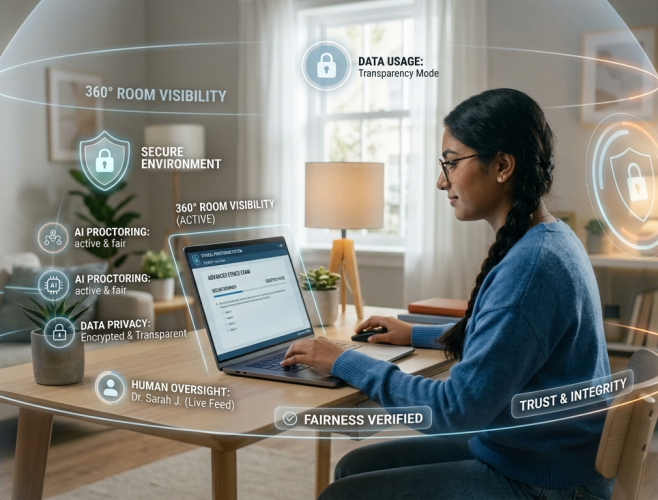
Candidate privacy is a paramount concern. All collected data is handled with strict adherence to privacy regulations such as GDPR and FERPA. This means data is often encrypted, anonymized where possible, and stored securely. Companies implement robust data retention policies and transparently inform candidates about data collection practices before the exam begins.
Q3: How long does implementation take, and what's required from our IT team?
The typical implementation timeline for real-time exam analytics software can vary depending on the complexity of your existing systems and the scope of integration. Generally, a standard implementation can take anywhere from 4 to 8 weeks to complete.
The required involvement from your IT team is usually minimal, as most modern platforms offer user-friendly interfaces and robust API documentation. We provide comprehensive API documentation, Software Development Kits (SDKs), and dedicated integration support. This ensures a smooth setup process and efficient connection with your existing Learning Management Systems (LMS) or Student Information Systems (SIS).
Q4: Can your analytics integrate with our existing LMS/SIS and identity providers?
Yes, most advanced exam analytics platforms are designed for seamless integration with a wide range of existing educational technologies. They typically offer pre-built integrations with major Learning Management Systems (LMS) such as Canvas, Moodle, Blackboard, and D2L Brightspace, as well as various Student Information Systems (SIS).
Beyond pre-built connectors, these platforms also support custom integrations via open REST APIs and LTI (Learning Tools Interoperability) standards. This flexibility allows for secure and efficient data exchange with your specific institutional systems and identity providers, ensuring a unified and streamlined assessment environment without disrupting current workflows.
Q5: How do you handle accessibility requirements and candidates with disabilities?
Ensuring accessibility for all candidates, including those with disabilities, is a critical aspect of responsible assessment design. Advanced exam analytics software platforms are built with accessibility in mind, incorporating features and accommodations to meet diverse needs.
This includes providing alternative assessment methods, customizable settings for visual or auditory impairments, and support for assistive technologies. These platforms strive to comply with international accessibility standards such as ADA (Americans with Disabilities Act) and WCAG (Web Content Accessibility Guidelines). This commitment ensures that all candidates have an equitable opportunity to demonstrate their knowledge and skills.